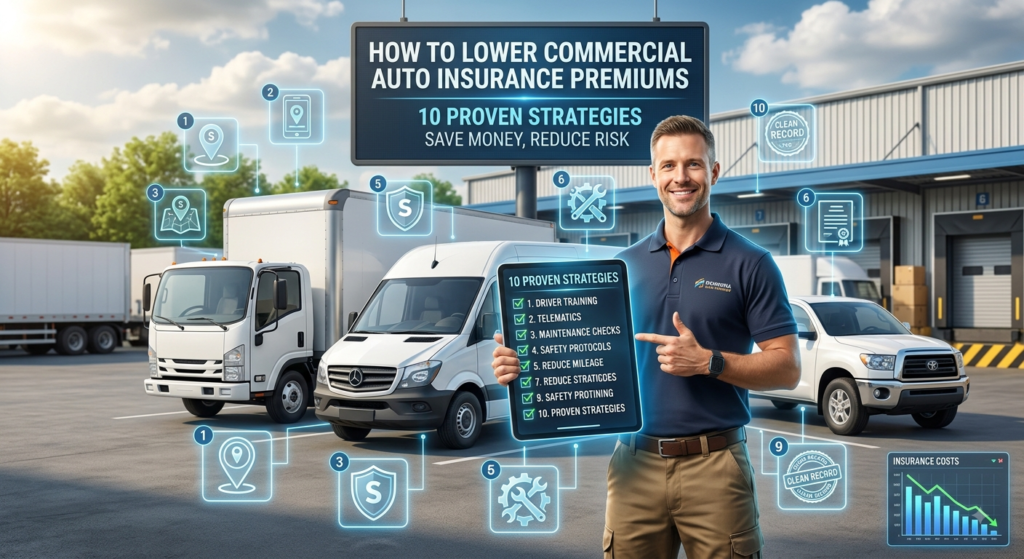

How to Lower Commercial Auto Insurance Premiums: 10 Proven Strategies
Commercial auto insurance costs have surged in recent years. Elevated inflation, rising vehicle repair costs due to complex onboard technology, and increased litigation payouts (often referred to as “social inflation”) have pushed commercial vehicle insurance rates to historic highs.
For businesses operating delivery vans, heavy transport trucks, or service fleets, insurance premiums represent one of the largest ongoing operational expenses. However, insurance carriers do not assign rates at random. Premiums are directly tied to your company’s risk profile.
By taking proactive steps to manage fleet risk, improve driver safety, and optimize policy structures, businesses can significantly reduce commercial auto insurance rates without compromising necessary coverage.
1. Implement Strict Driver Screening and Recruitment Standards
Your drivers represent your largest exposure to loss. A single high-risk driver with multiple moving violations or past collisions can drive up the commercial auto insurance rate for an entire fleet.
To build an underwriting-friendly driver pool:
- Pull Motor Vehicle Records (MVRs): Review MVRs for all potential hires before offering employment, and re-screen existing drivers annually.
- Set Clear Eligibility Thresholds: Establish firm guidelines regarding acceptable driver records (e.g., maximum of one minor violation in three years and zero major violations such as DUIs, reckless driving, or excessive speeding).
- Require Minimum Commercial Experience: Inexperienced drivers statistically file more claims. Requiring a minimum of 2–3 years of commercial driving experience for specialized vehicles helps secure better tier pricing from carriers.
2. Deploy Fleet Telematics and Dashcams
Insurance carriers increasingly reward businesses that adopt technology to monitor and mitigate risk. Telematics systems track real-time vehicle data, including speed, harsh braking, rapid acceleration, cornering, and route efficiency.
- Insurance Discounts: Many commercial auto insurers offer immediate 5% to 15% premium discounts simply for installing approved telematics hardware across your fleet.
- Driver Coaching: Telematics data allows managers to identify risky driving behaviors early and provide targeted training before an accident occurs.
- Dual-Facing Dashcams: Video footage provides clear evidence in non-fault accidents, helping your legal team and insurer defeat fraudulent claims quickly and protect your loss history.
3. Establish Continuous Safety and Defensive Driving Programs
Demonstrating a safety-first company culture directly impacts your annual insurance renewal negotiations. Insurers favor policyholders who systematically train their workforce.
Key elements of an effective fleet safety program include:
- Mandatory Onboarding Training: Every new driver should complete a formal defensive driving course tailored to your specific vehicle types.
- Regular Safety Briefings: Conduct monthly or quarterly safety meetings addressing seasonal driving hazards, cell phone usage policies, and fatigue management.
- Incentive Programs: Reward drivers who maintain clean safety records, complete training modules, or achieve high telematics safety scores.
4. Optimize Deductibles and Physical Damage Coverage
Adjusting your policy structure is one of the most immediate ways to lower monthly premiums.
- Increase Your Deductibles: Raising your collision and comprehensive deductible from $500 to $1,000 or $2,500 transfers more minor risk back to your business, resulting in lower monthly premiums. Ensure your business maintains a cash reserve to cover these deductibles in the event of an incident.
- Evaluate Older Fleet Vehicles: For older, fully depreciated vehicles with low market value, the cost of carrying comprehensive and collision coverage may exceed the potential payout. Dropping physical damage coverage on aging assets while maintaining required liability coverage can yield substantial savings.
5. Bundle Commercial Insurance Policies
Purchasing commercial auto insurance as a standalone policy often costs more than bundling it into a comprehensive business package.
Insurers typically offer multi-policy discounts (often 5% to 20%) when you combine commercial vehicle coverage with:
- Commercial General Liability (CGL)
- Commercial Property Insurance
- Business Owners Policy (BOP)
- Commercial Umbrella / Excess Liability Policy
- Workers’ Compensation Insurance
6. Enforce a Strict Drug and Alcohol Testing Policy
Substance abuse significantly elevates collision risks and legal liability exposure. Implementing a clear, zero-tolerance drug and alcohol policy signals to insurance underwriters that your company proactively mitigates high-severity risks.
Your substance policy should mandate:
- Pre-employment screening for all safety-sensitive roles.
- Random testing throughout the year.
- Mandatory post-accident testing following any workplace vehicle incident.
7. Maintain Rigorous Vehicle Maintenance Records
Mechanical failures—such as worn brakes, tire blowouts, or steering malfunctions—can turn minor traffic situations into severe accidents.
Insurers frequently audit fleet maintenance logs during underwriting reviews. Implementing a formal preventative maintenance program demonstrates operational control:
- Enforce pre-trip and post-trip vehicle inspection reports (DVIRs) for all drivers.
- Schedule routine servicing based on mileage or operational hours.
- Keep detailed digital records of all repairs and maintenance work to share with insurance auditors during renewal.
8. Streamline Accident Reporting and Claims Management
Delayed claim reporting increases loss costs. When an accident is reported days or weeks late, medical costs escalate, evidence degrades, and legal representation costs increase.
- Provide On-Scene Kits: Equip every commercial vehicle with an accident kit containing clear step-by-step instructions, photo guidelines, contact numbers, and witness identification cards.
- Report Immediately: Require drivers to report all incidents immediately—regardless of severity. Rapid claims resolution limits third-party attorney involvement and reduces total settlement amounts, keeping your loss history clean.
9. Pay Premiums Annually and Maintain Continuous Coverage
How you pay for your policy and your insurance continuity directly affect your pricing tier:
- Pay Full Annual Premiums Upfront: Paying your policy in one lump sum eliminates monthly installment processing fees and finance charges, saving 3% to 10% annually.
- Avoid Coverage Lapses: Lapses in commercial auto coverage trigger higher baseline risk pricing from carriers. Always renew or replace policies well before the expiration date to maintain uninterrupted continuous coverage status.
10. Compare Commercial Auto Quotes Annually
Insurance carriers adjust their underwriting appetites, regional target markets, and pricing structures constantly. A carrier that offered the most competitive rate three years ago may no longer offer the best rate today.
- Work with an independent commercial insurance broker who has access to multiple top-rated national carriers.
- Request competitive quotes at least 60 to 90 days before your renewal date.
- Present a clean safety record, documented fleet management protocols, and telematics reports to leverage better underwriting terms across competing carriers.
Summary: Commercial Auto Savings Breakdown
| Strategy | Primary Benefit | Expected Impact |
|---|---|---|
| Fleet Telematics & Dashcams | Real-time driver tracking & reduced claim disputes | 5% – 15% Direct Discount + Reduced Claims |
| Higher Deductibles | Lower upfront monthly premium commitments | 10% – 25% Premium Reduction |
| Multi-Policy Bundling | Discount for combining business auto with CGL/BOP | 5% – 20% Total Policy Savings |
| Annual Payment Plan | Eliminates installment fees & finance surcharges | 3% – 10% Savings on Total Bill |
| Strict MVR & Driver Screening | Eliminates high-risk claims before they happen | Long-term rate tier improvement |
Final Thoughts
Lowering commercial auto insurance costs is an ongoing strategy rather than a one-time fix. Insurance carriers reserve their best pricing tiers for businesses that view risk management as a core operational priority. By enforcing driver safety standards, leveraging telematics technology, optimizing deductible structures, and working with an experienced commercial agent to shop quotes annually, your business can secure maximum protection at the lowest possible cost.