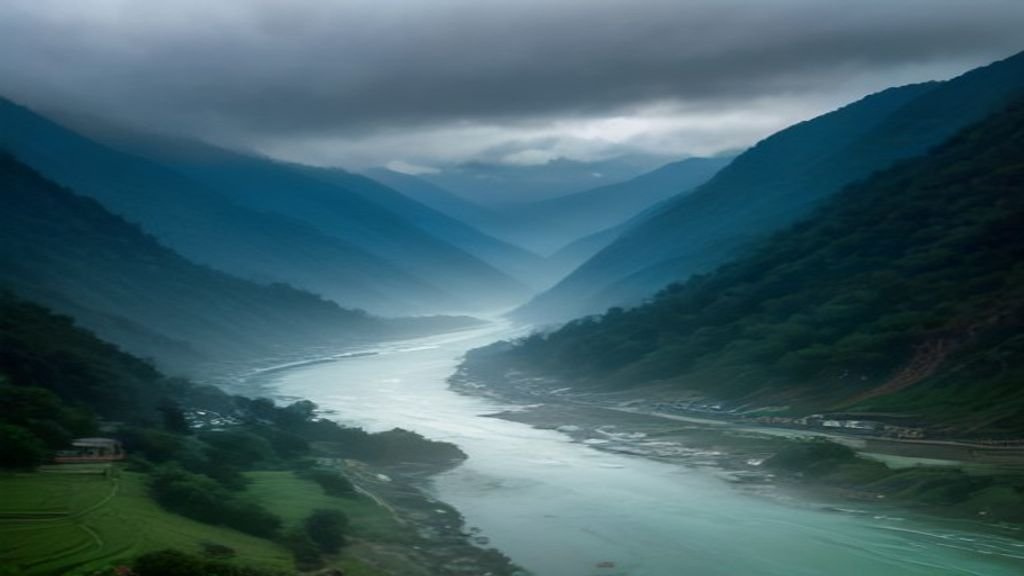

The recent catastrophic floods and landslides in Nepal have once again exposed the heartbreaking vulnerability of low-emission nations to the global climate crisis. Entire neighborhoods have been swept away, critical infrastructure damaged, and hundreds of human lives lost in a matter of hours. As mountain communities scramble to clear mud and locate survivors, a powerful diplomatic voice is emerging from Kathmandu. Nepal is raising a fundamental moral and economic question: why should a country responsible for less than 0.1% of global greenhouse gas emissions bear the devastating costs of climate change alone? The demand for Nepal climate justice is no longer just a diplomatic request—it is a critical plea for survival.
The Unprecedented Scale of Nepal’s Latest Flood Disaster
Nepal’s geographic positioning makes it one of the most topographically extreme nations on Earth. While the towering Himalayas attract adventurers from across the globe, they also act as ground zero for extreme weather events driven by rising global temperatures. Recent cloudbursts brought record-breaking rainfall across central and eastern regions, causing rivers like the Bagmati, Koshi, and Gandaki to breach their banks violently.
The physical destruction extends far beyond flooded streets. Landslides have severed primary highway arteries, isolating remote mountain villages and halting essential emergency supplies. Dozens of hydroelectric power plants—the backbone of Nepal’s clean energy grid—have been severely damaged or knocked offline, causing widespread energy disruptions. For a developing nation working tirelessly to lift its citizens out of poverty, the loss of infrastructure represents decades of lost development progress in a single weekend.
The Math of Disparity: Minimal Footprint, Maximum Impact
To understand why the movement for Nepal climate justice is gaining global momentum, one must look at the stark contrast between carbon output and climate vulnerability. Industrially advanced nations have built their wealth through centuries of fossil fuel consumption, pouring gigatons of carbon dioxide into the atmosphere. In contrast, Nepal’s historical contribution to global emissions is virtually negligible.
Despite this tiny carbon footprint, Nepal consistently ranks among the top ten most climate-vulnerable countries in the world according to global risk indices. The warming rate in the high-altitude Himalayan region is significantly higher than the global average. This rapid warming accelerates glacial melting, creating thousands of unstable glacial lakes that pose an existential risk of Glacial Lake Outburst Floods (GLOFs) to downstream populations.
The Obligation of Large Nations: From Sympathy to Accountability
When Nepalese officials call upon high-emitting developed nations to honor their global climate obligations, they are invoking principles established under international environmental law, including the United Nations Framework Convention on Climate Change (UNFCCC). These frameworks explicitly recognize the concept of ‘Common But Differentiated Responsibilities’ (CBDR).
For years, international climate discussions focused primarily on ‘mitigation’ (reducing emissions) and ‘adaptation’ (preparing for future impacts). However, for nations currently facing climate-induced destruction, those measures come too late. The primary focus has now shifted to ‘Loss and Damage’—financial compensation for non-recoverable losses caused by climate-driven disasters. The demand for actionable Nepal climate justice requires large nations to translate financial pledges into immediate, accessible grants rather than high-interest loans that push vulnerable economies deeper into debt.
The Regional Threat: The Himalayan Water Tower in Peril
The climate emergency in Nepal is not an isolated national issue; it poses severe systemic risks to the entire South Asian subcontinent. The Himalayas are frequently referred to as the ‘Third Pole’ or the ‘Water Tower of Asia’ because their ice fields feed major river systems—including the Ganges, Indus, and Brahmaputra—that supply fresh water to over 1.3 billion people.
When erratic monsoons and accelerated glacial melt disrupt Nepal’s hydrology, the consequences spill directly across national borders into India and Bangladesh. Uncontrolled floodwaters destroy agricultural lands, silt up regional reservoirs, and displace cross-border communities. Protecting Nepal’s mountain ecosystems through international climate funding is therefore an investment in the long-term water and food security of the entire region.
A Strategic Framework for Effective Climate Justice
Achieving meaningful equity for vulnerable nations requires a structured, accountable, and urgent response from the international community. Advocating for Nepal climate justice requires actionable mechanisms rather than vague summit declarations:
- Direct and Unrestricted Loss and Damage Grants: Emergency funding mechanisms must disburse grants swiftly after extreme weather events, bypassing bureaucratic delays that hinder real-time recovery.
- Debt Relief and Climate Swaps: Highly vulnerable nations should have portions of their foreign debt forgiven or converted into local environmental preservation projects.
- Technology Transfer for Early Warning Systems: High-income nations must provide advanced meteorological equipment, satellite tracking, and radar technologies to enhance real-time disaster response in mountainous terrains.
- Strengthening Community-Led Adaptation: Financial resources must directly reach indigenous and local mountain communities who possess generations of ecological knowledge but lack modern structural capital.
The Economic Burden on Nepal’s Future Generation
The economic toll of recurrent disasters threatens to derail Nepal’s national budget for decades. When emergency relief drains resources away from public education, healthcare, and digital infrastructure, young Nepalese citizens pay the ultimate price. Instead of investing in future-oriented technology and economic expansion, the government is forced into a continuous cycle of disaster repair and reconstruction.
Moreover, the psychological toll on rural farmers and urban dwellers alike is profound. Living under the constant fear of sudden flash floods creates chronic instability, forcing young working-age individuals to migrate abroad for employment, which further weakens the domestic economy.
Conclusion: Moving from Diplomatic Rhetoric to Financial Action
The recent devastating floods in Nepal serve as a stern reminder that climate change is not a far-off future threat—it is a present-day crisis taking lives and destroying livelihoods right now. Small, low-emitting nations can no longer be expected to bear the financial and human costs of a global crisis they did not create.
True progress requires global powers to recognize that climate financial aid is not charity; it is an obligation grounded in historical accountability and global justice. By delivering full financial support, technology sharing, and structural debt relief, the international community can ensure that Nepal receives the climate justice it desperately needs and rightfully deserves.